Where should I start with all these features?
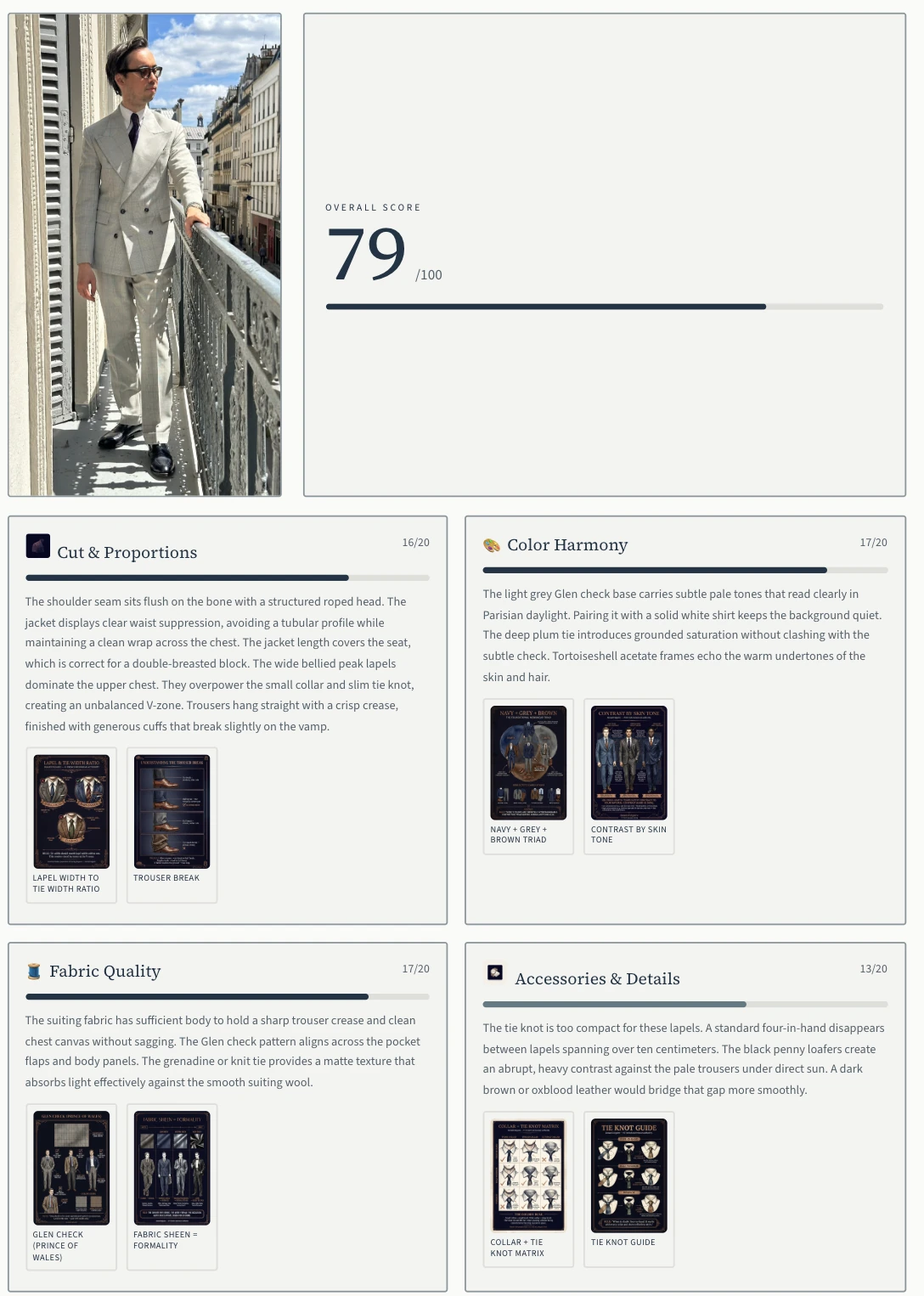
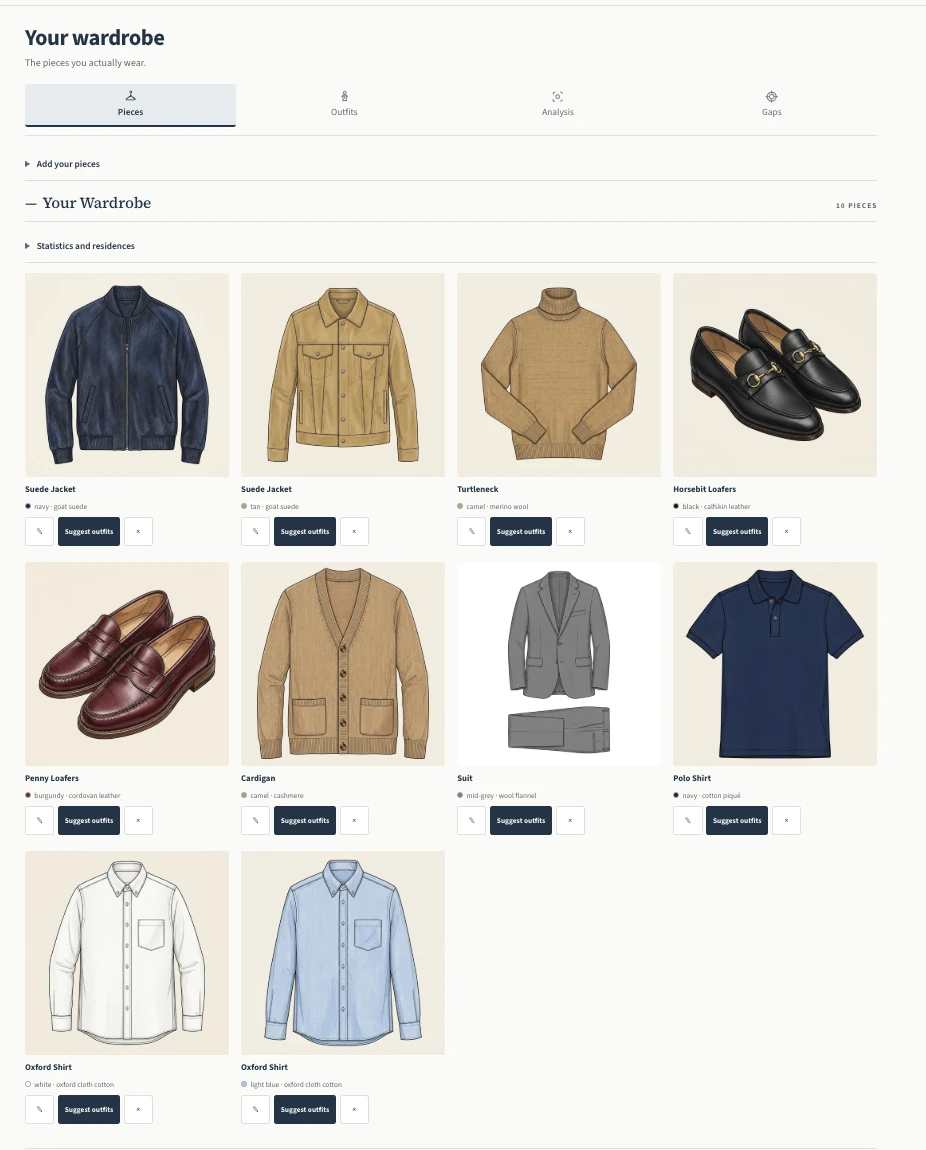
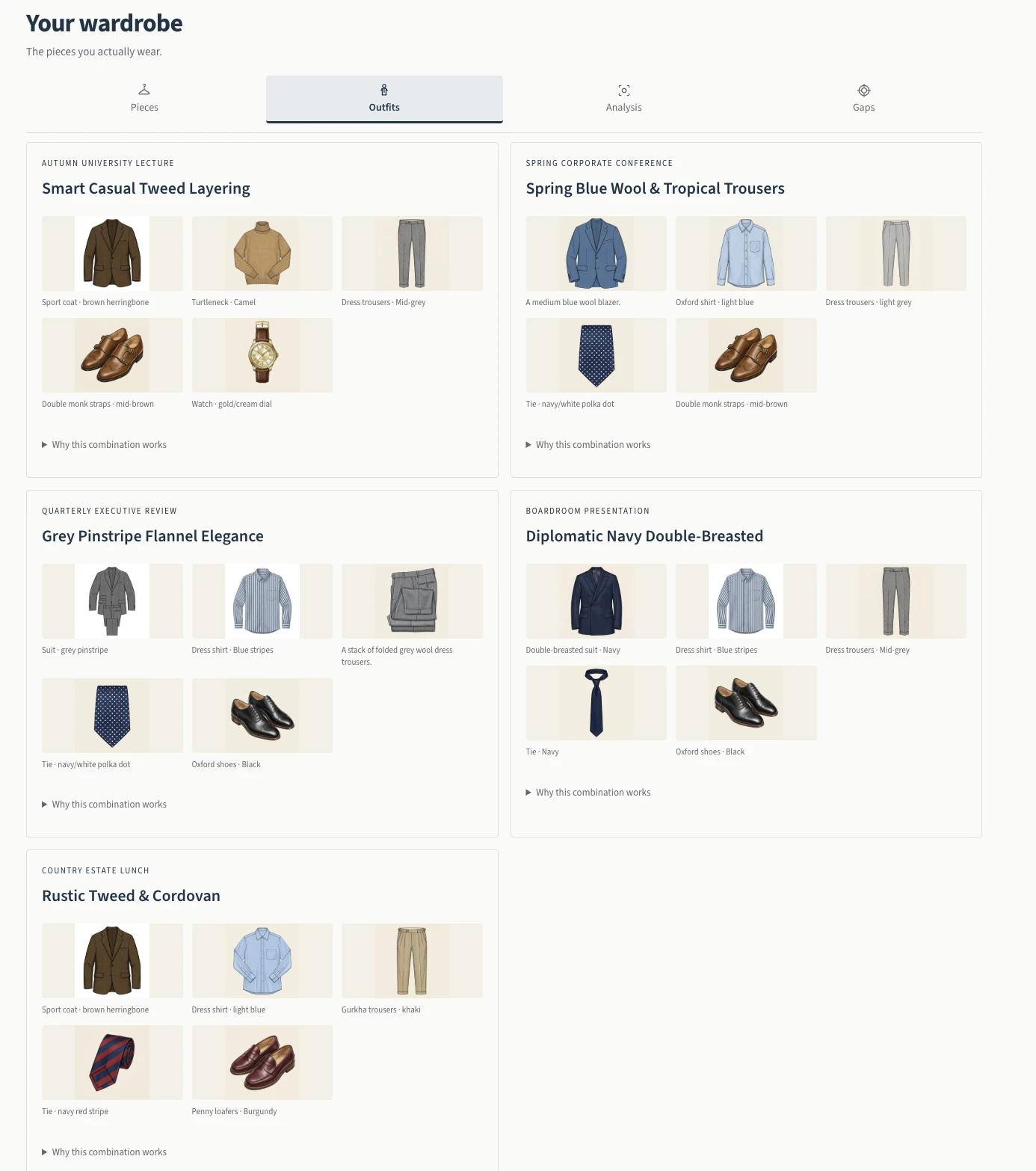
If you want an opinion on what you are wearing, start with a photo in Style Rater. To find what to wear tomorrow, add your first pieces to the wardrobe and request an outfit.
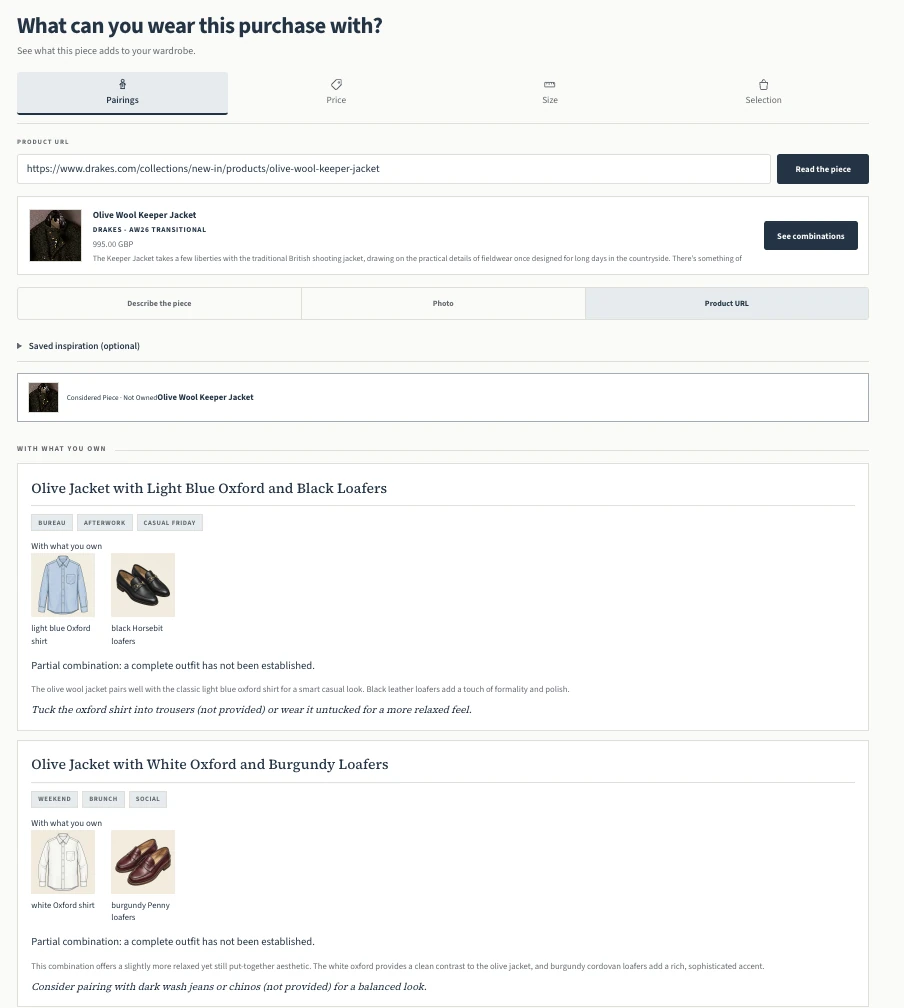
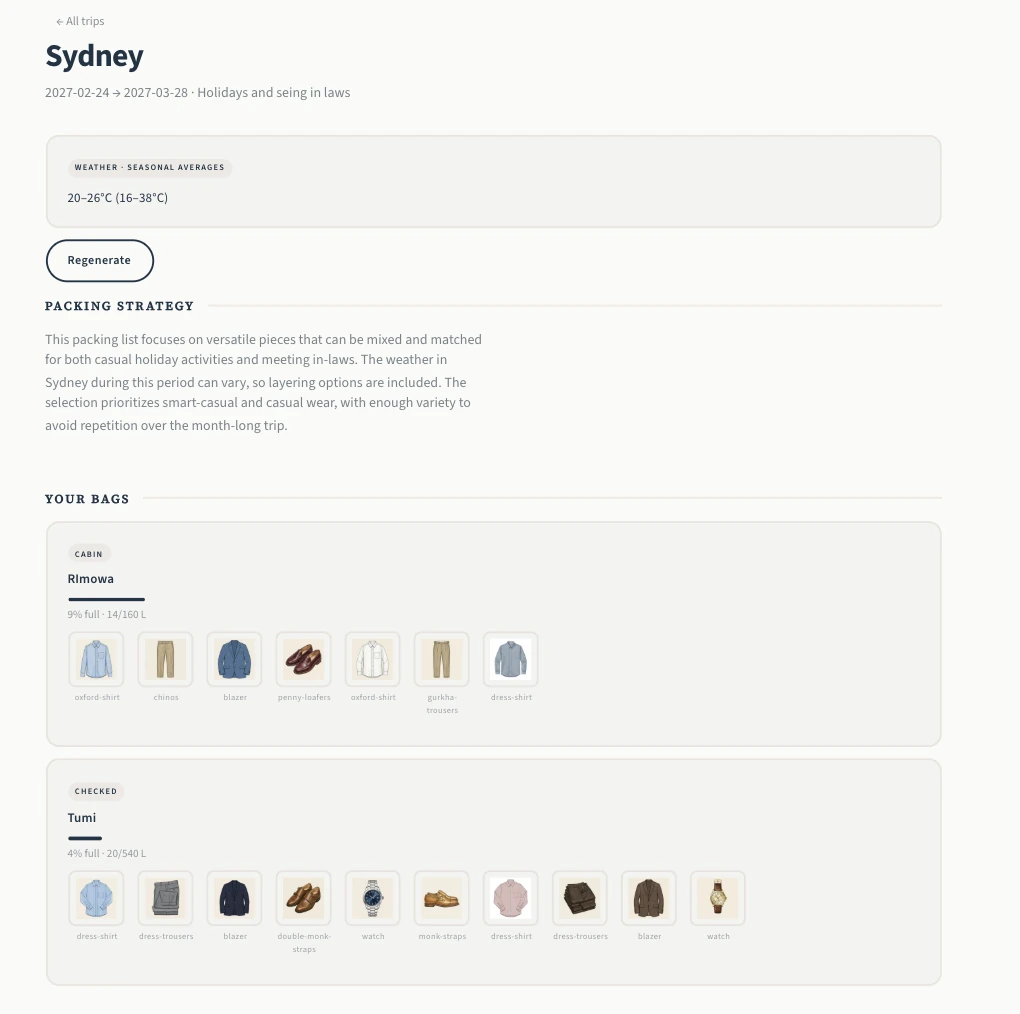
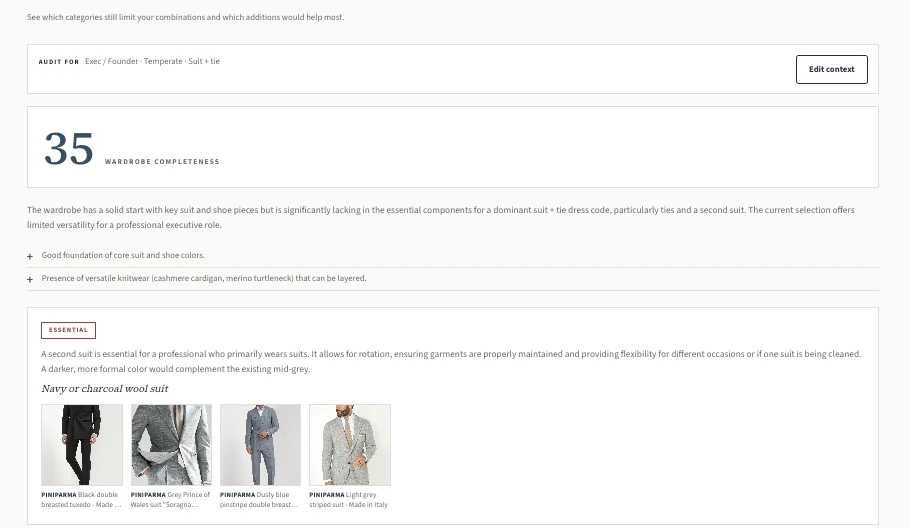
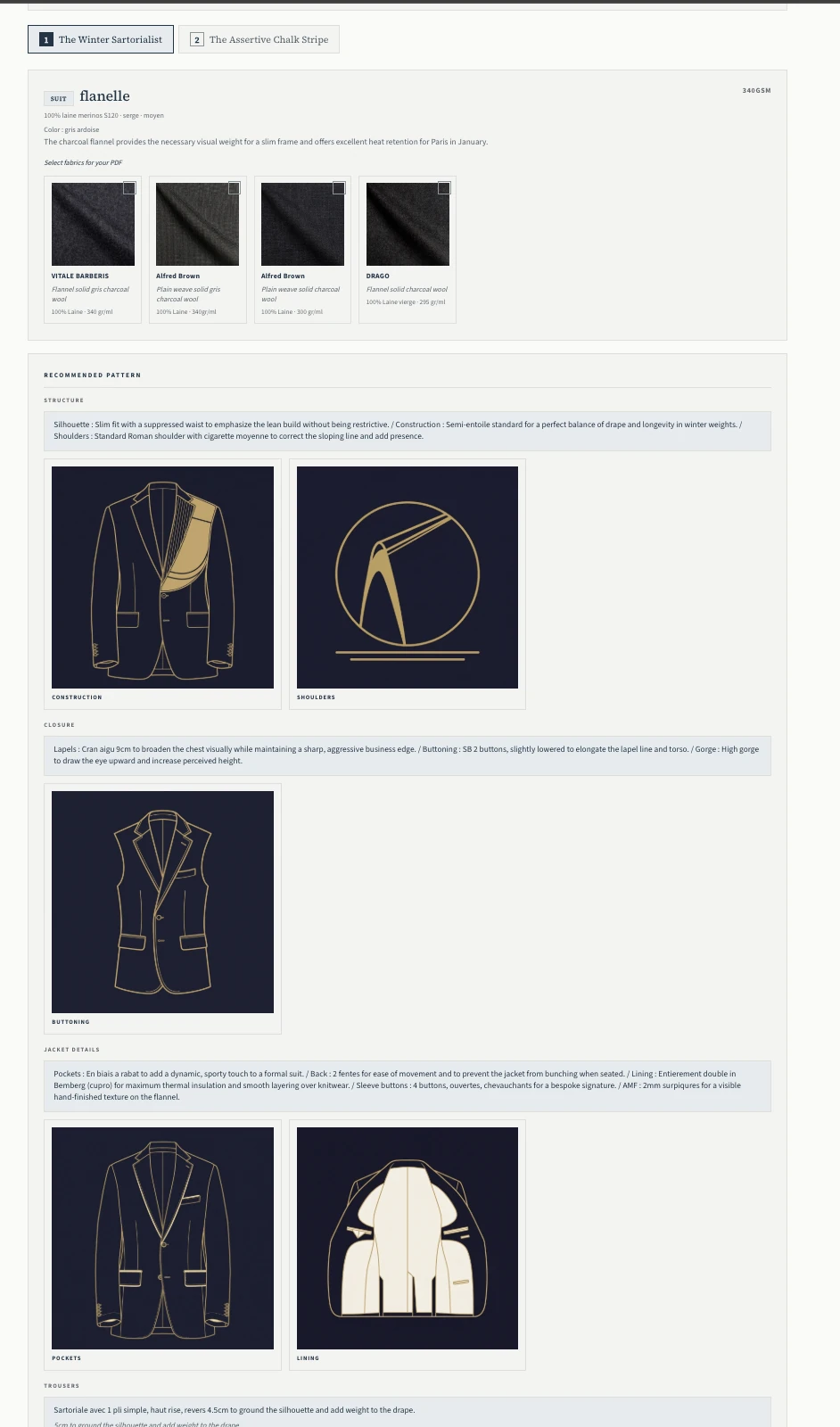
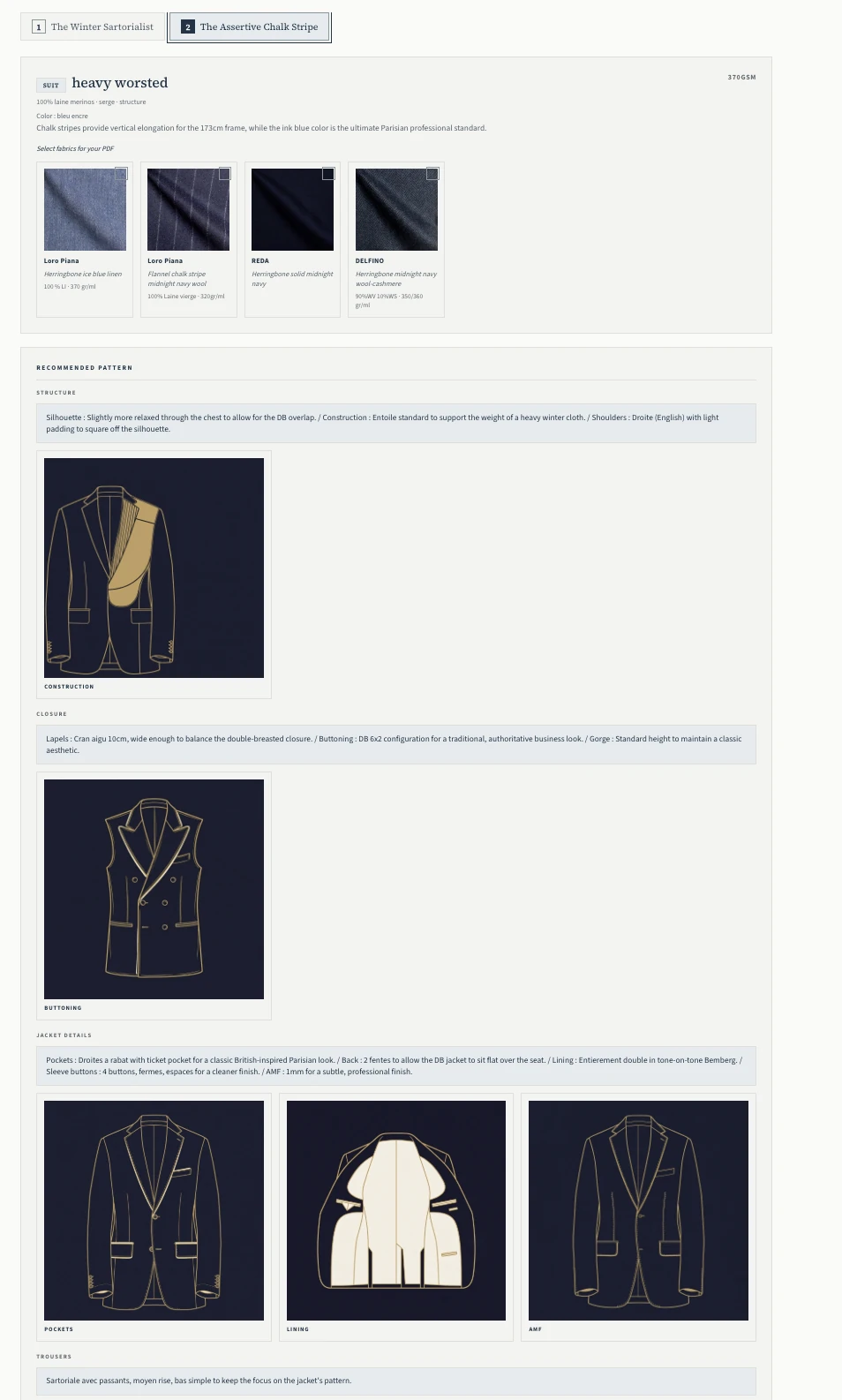
The other tools address occasional needs: testing a purchase, preparing a trip or choosing fabric at the tailor. You can use them when the question arises.
Do I need to add my entire wardrobe?
No. Add at least three pieces to request an outfit, then build up your wardrobe gradually. The relevance of the suggestions depends, in particular, on the clothes and information available.
Will I receive an outfit automatically?
No. You request a suggestion for today or tomorrow in Outfit. Weather and calendar information are optional contexts, used when available. This is not an automatic delivery or notification.
How do credits work?
Generations use the credits allocated to your account. Check your balance and allowance in the app. Neither plan promises unlimited generations.
Can I cancel or request a refund?
For the annual subscription: You may request cancellation and a full refund within 14 days of purchase. After that, the subscription is billed annually on its anniversary date. You can turn off renewal at any time; your access remains active until the end of the paid period.
For any request: contact@jamaisvulgaire.com
Read the terms of service